Spine Health Through Yoga
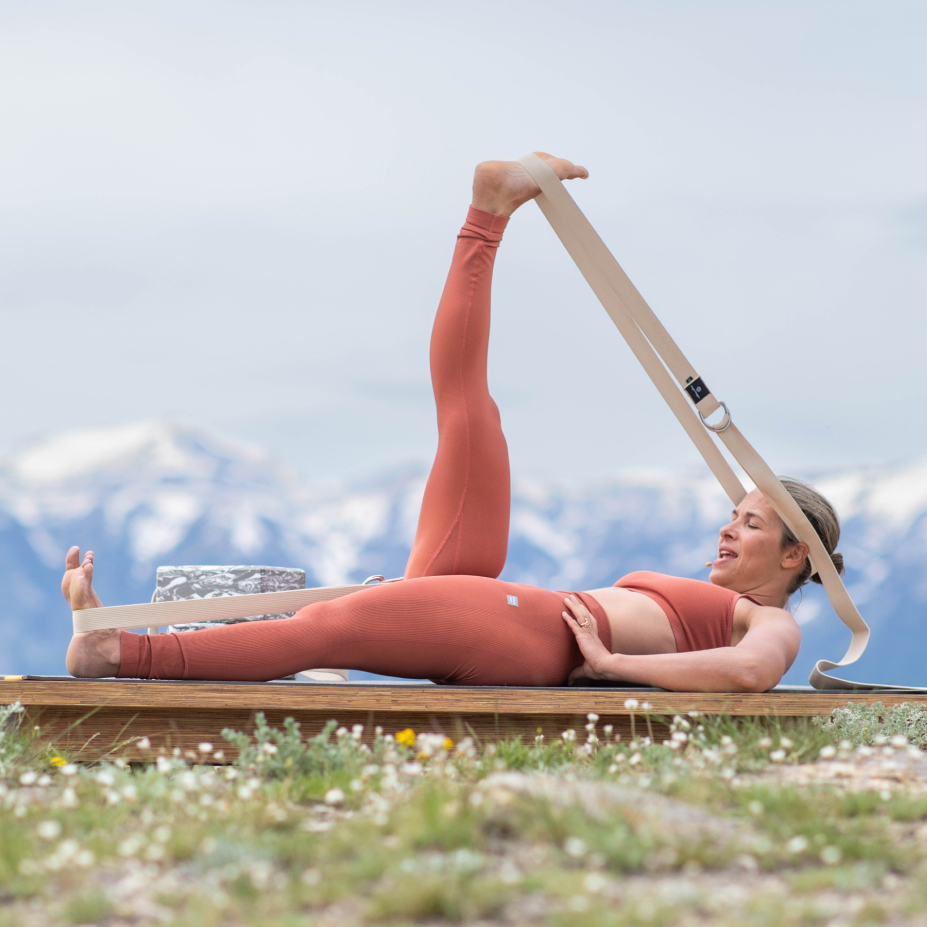
Your spine holds you up all day. Sitting at a desk. Carrying groceries up the stairs. Slouched on the couch at the end of the night. It does this without complaint, and you don’t notice until it hurts. “Stand taller. Move freer. Live lighter.” describes what happens when you finally pay attention to it.
That’s the state a healthy spine is in: not fighting your posture, not bracing against pain, just doing the job it’s built for.
What’s actually pulling on your spine
Your spine doesn’t cause its own problems. It only bends and twists as much as the muscles around it allow.
It usually starts in your legs. Sitting for hours shortens your hamstrings and hip flexors, and that tension travels straight up into your lower back. Real back relief tends to start at the base, not at the spot where it hurts. Your core matters just as much, holding your spine steady from the front, the sides, and the back. When that support is missing, your vertebrae end up doing work they weren’t built for. Then there’s your chest. Hours hunched over a desk round your shoulders forward and drag your neck and upper spine along with them.
None of this shows up as a spine problem at first. It shows up as tight hips. Stiff shoulders. A neck that clicks when you turn your head. By the time your back actually hurts, the pulling has been happening for a while.
Start with your legs
Congestion in your legs is one of the most overlooked sources of back tension. Hamstrings, calves, hips holding onto stiffness day after day, all of it pulling down on the base of your spine. Releasing that stored tension is often the fastest way to feel your lower back loosen. This isn’t just about flexibility. It’s about taking the pressure off your spine so it can sit where it’s supposed to, instead of compensating for what’s tight below it.
Build the support system: your core
Once your legs stop pulling, your spine still needs something holding it up. That’s where your core comes in, not just your abs, but the whole cylinder around your midsection: front, sides, and back, working together. A strong core means your spine isn’t the only thing keeping you upright. It shares the load. Strengthen that support and your spine gets to stay long and stable, which is what keeps it healthy for the long run, not just today.
Open your heart: chest, shoulders, and neck
The last piece is what’s happening above the belt. Hours at a desk round your shoulders forward and cave your chest in, and that pulls your neck and upper spine right along with it. Opening your heart reverses that pull, bringing clarity back to your neck and throat and easing tension that builds through the shoulders. This is the restorative part of the practice, made for mornings when you wake up stiff, or evenings after a day spent hunched over a screen.
Where to start
Legs feeling stuck? Start there. Core feel weak or unsupported? Start there instead. Neck and shoulders tight from your desk? That’s your entry point. Each piece supports the others, so wherever you start, the rest of your spine benefits too.
Standing taller isn’t about forcing better posture. It’s about removing what’s pulling you out of it.
Ready to loosen what’s been pulling on your spine? Press play and work through the series.
- Stretch Your Legs to Heal Your Spine
- Strengthen Your Core to Heal Your Spine
- Open Your Heart to Free Your Spine
Embrace Your Spirit with YogaToday. Join now

A Gentle Practice for Moving Stuck Energy
Energy blocks sound abstract until you notice how often you already feel them. The tight chest when anxiety hits. The knot in your stomach under stress. Shoulders climbing toward your ears when everything piles on. These

YogaToday Blog: How to Get On the Mat More Consistently
Most fitness advice tells you to push harder. Do more. Suffer through. But real power comes from showing up consistently. You can claim your space and take up the room you need to take care of yourself.

The truth about mindful weight loss: Why awareness beats willpower
Weight loss advice tells you what to do but never how to actually listen to your body. Every diet promises the same thing: follow our rules and find a way to push through.