How open hips
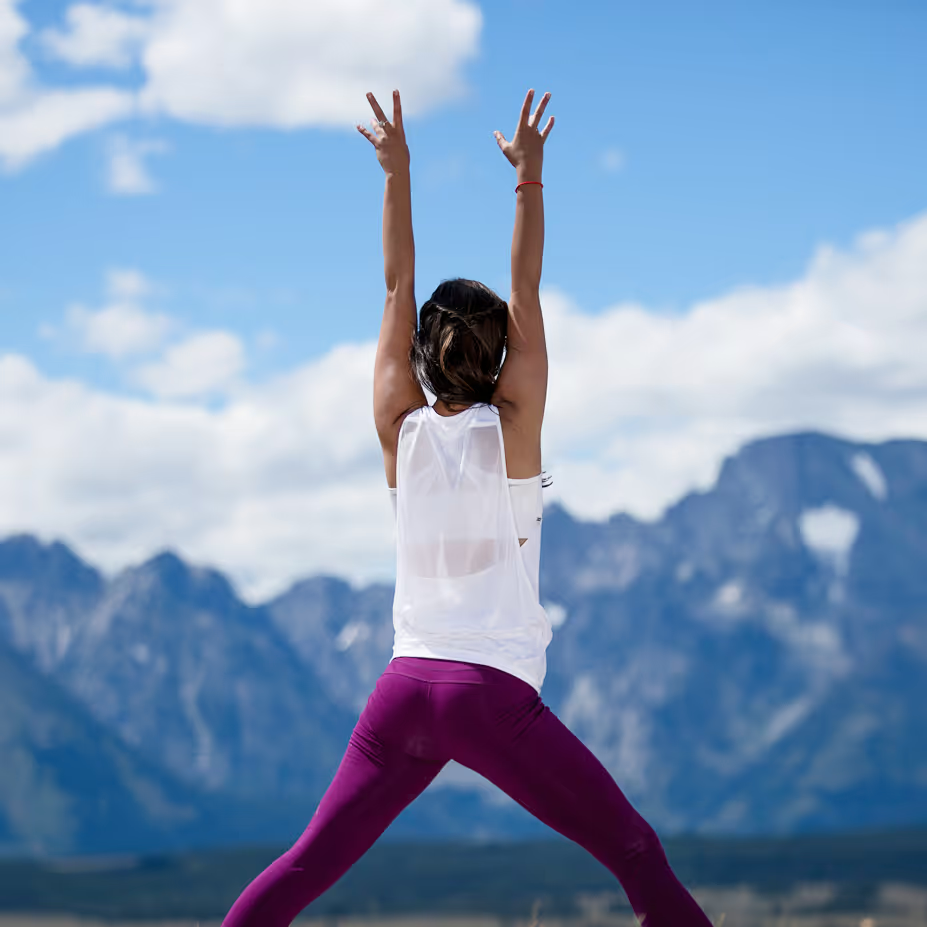
Your tight hips are a mobility problem affecting everything you do. You may think hip tightness only matters for yoga poses. But restricted hips affect how you walk. Sit. Stand. Move through daily life.
Hip mobility transforms daily movement. When your hips can move freely, everything else works better. Your back hurts less. Your knees feel more stable. You can get up from chairs without wincing.
Why hip mobility matters more than you think
Restricted hips affect your walking. Sitting. Standing. You might not notice until you try to squat down. Get up from a low chair. That stiffness when walking upstairs? That's hip restriction. Lower back pain after sitting all day? Usually connected to tight hips.
Hip restrictions lead to knee and ankle problems because your body finds a way to move through the tightness. Other joints pick up the slack. Over time, this creates wear and tear where it doesn't belong.
Flexibility is passive range of motion. Mobility is controlled movement through that range. You can be flexible but not mobile. You can stretch your hips but still move poorly.
How hip restrictions develop
Sitting all day shortens hip flexors. Weakens glutes. Your hip flexors stay shortened. Your glutes forget how to work. This combination creates a concerning issue of restriction and instability at the same time.
Repetitive movement patterns create restrictions too. Always walking the same way. Standing with the same posture. Sleeping in the same position. Your body adapts to what you do most, which can limit you.
Signs your hips are limiting your mobility: difficulty getting up from low chairs. Stiffness when walking upstairs. Lower back pain after sitting or standing. Feeling "stuck" in your pelvis and lower body. This isn't just normal aging. These are restrictions that can be addressed.
What hip opening improves
Daily movement becomes easier when your hips can move freely. Your gait improves. Walking becomes more efficient. You can squat. Lunge. Get up from the floor without struggle. Your posture improves because you're not compensating for restricted hips.
Athletic performance improves with hip mobility. Running becomes more efficient. Cycling is more comfortable. Sports movements feel more natural. Open hips prevent injury in other activities because your body can move the way it's designed to.
Pain reduction happens when hip restrictions clear. Lower back stress decreases. SI joint stability improves. Sciatica often resolves when hips can move properly. Hip impingement decreases when you have good mobility.
Hip opening reduces lower back stress because your spine doesn't have to compensate for what your hips can't do. When your hips can extend, flex, and rotate properly, your back can do its job without overworking.
Moving past traditional hip stretches
Pigeon pose isn't enough for real mobility. Static stretches miss dynamic mobility needs. You need movement that builds strength while opening. Movement in multiple planes. Not just forward and back.
Flexibility without strength is instability. You need control through your new range of motion. Otherwise, your body will recreate restrictions to feel safe.
Spinal rotation affects hip mobility more than most people realize. When your thoracic spine can't rotate, your hips compensate. When your hips are stuck, your spine works harder. Twisting releases deep hip restrictions by addressing the whole system.
Headstands help decompress the hips by changing your relationship to gravity. When you're upside down, your hip joints can release in ways they can't when you're upright. Inversions also affect your nervous system in ways that support hip release.
Building functional hip mobility
Passive stretching happens to you. Active mobility is movement you control. You need both. But mobility is what transfers to daily life.
Building strength in new ranges of motion ensures that your hip opening is functional. If you can only access hip mobility when someone else moves your leg, it's not truly yours. You need to be able to move there yourself.
Control matters more than depth in hip opening. It’s better to have a moderate range of motion that you can control than extreme flexibility that you can't use. Control creates confidence. Confidence allows more release.
Integration into daily life
Simple movements throughout the day maintain hip mobility better than one long stretch session. Hip circles while waiting for coffee. Gentle squats during work breaks. Walking with awareness of how your hips move.
How you sit, stand, and move matters for hip health. Vary your positions throughout the day. Stand up every hour. Sit on the floor sometimes instead of always in chairs. These small changes prevent restrictions from returning.
Building habits that support hip health doesn't require major lifestyle changes. Take stairs when you can. Park further away to walk more. Choose movement over convenience when possible. These choices compound over time.
Working with your body
One hip is usually tighter than the other. You favor one side when walking. Sleep on one side more often. Carry bags on one shoulder. This creates asymmetries.
Work with imbalances without forcing symmetry. Accept that your body isn't perfectly even. Work with what you have and don’t stress to make both sides the same. Aim for functional balance that improves your every day.
When to back off and when to lean in depends on what you're feeling. Sharp pain means back off. Emotional intensity often means leaning in gently. Muscle tension usually means to breathe and stay present.
Your path to better mobility
Assess the state of your current hip mobility honestly. Everyday movements tell you more than how deep you can fold forward. Choose approaches that match your body's needs. Sit all day? Focus on hip flexor release. Very flexible but unstable? Work on strength. Tight everywhere? Start gently with basic movements. Build a practice that creates change and supports consistency. It’s better to do a little every day than to push during a single long session.
Moving with ease
Hip mobility is functional. Open hips help you move through life with ease. They reduce pain. Prevent injury. Make daily activities more enjoyable. Ready to discover what open hips can do for your daily movement? Start with what feels accessible and use this playlist to get on the right path.

A Gentle Practice for Moving Stuck Energy
Energy blocks sound abstract until you notice how often you already feel them. The tight chest when anxiety hits. The knot in your stomach under stress. Shoulders climbing toward your ears when everything piles on. These

YogaToday Blog: How to Get On the Mat More Consistently
Most fitness advice tells you to push harder. Do more. Suffer through. But real power comes from showing up consistently. You can claim your space and take up the room you need to take care of yourself.

The truth about mindful weight loss: Why awareness beats willpower
Weight loss advice tells you what to do but never how to actually listen to your body. Every diet promises the same thing: follow our rules and find a way to push through.